
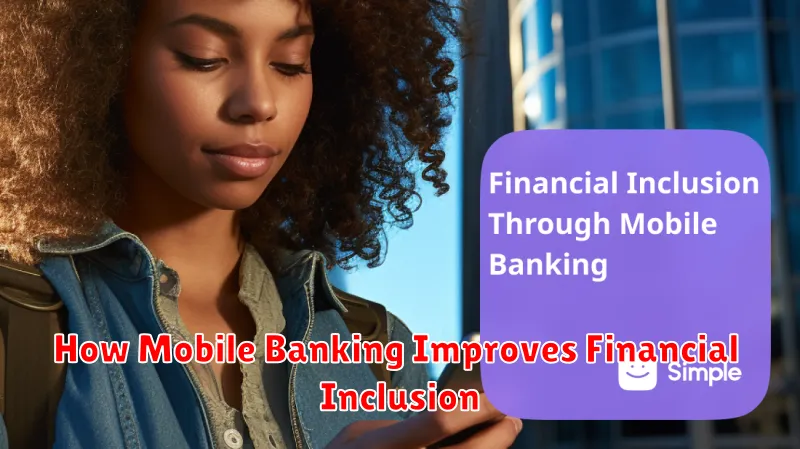
Financial inclusion is a critical component of economic development, enabling individuals and businesses to access essential financial services. Mobile banking has emerged as a powerful tool to broaden financial inclusion, especially in underserved communities. This article will explore how mobile banking significantly improves financial inclusion by providing convenient, affordable access to a range of financial services, thus empowering individuals and fostering economic growth. We will delve into the various ways mobile banking overcomes traditional barriers to financial access, offering a lifeline to those previously excluded from the formal financial system.
Traditional banking often presents significant challenges for individuals in remote areas or those with limited resources. Mobile banking addresses these challenges by leveraging the widespread availability of mobile phones. By offering services like account opening, money transfers, bill payments, and even access to credit and insurance, mobile banking bridges the gap between the underserved and the financial world. This article will examine the specific ways mobile banking is transforming financial landscapes and promoting financial inclusion globally, including its impact on individuals, businesses, and the overall economy.
What Is Financial Inclusion?
Financial inclusion means that individuals and businesses have access to useful and affordable financial products and services that meet their needs – transactions, payments, savings, credit and insurance – delivered in a responsible and sustainable way.
This access is considered essential for individuals and businesses to participate and thrive within the economy. Those lacking access to financial services are often excluded from opportunities to improve their lives and build a secure future.
The Rise of Mobile-First Banking Solutions
The proliferation of smartphones, especially in developing economies, has fueled the rise of mobile-first banking solutions. These solutions prioritize mobile interfaces as the primary, and sometimes sole, method of accessing financial services. This approach bypasses the need for traditional brick-and-mortar branches, significantly reducing operational costs.
Mobile-first banking empowers individuals in underserved communities with unprecedented access to financial tools. Features like account opening, money transfers, bill payments, and even micro-loans become readily available through a mobile device. This easy accessibility is pivotal in driving financial inclusion.
Reaching Underserved Communities
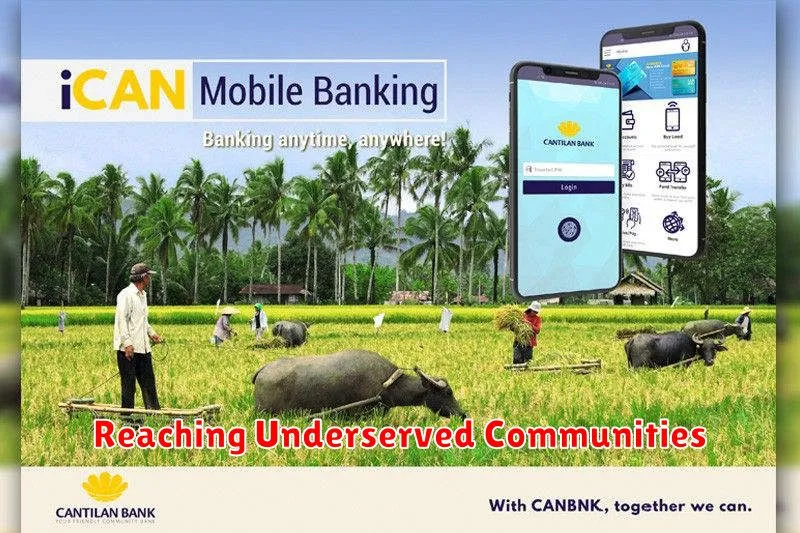
Mobile banking has emerged as a powerful tool for reaching underserved communities, particularly those in rural or remote areas with limited access to traditional banking infrastructure. Geographic isolation is no longer an insurmountable barrier to financial services.
By leveraging the widespread availability of mobile phones, financial institutions can extend their reach and offer essential financial services to previously excluded populations. This includes providing access to basic banking services such as account opening, deposits, withdrawals, and money transfers, all through a mobile device.
Reducing Costs with Digital Infrastructure
Traditional banking relies heavily on physical branches, requiring significant investment in land, buildings, and staff. This contributes to higher operational costs which are often passed on to customers. Digital infrastructure, however, significantly reduces these expenses.
Mobile banking leverages existing telecommunications infrastructure, minimizing the need for costly brick-and-mortar locations. This cost reduction translates to lower fees for customers, making financial services more accessible, especially for low-income individuals.
Empowering Individuals Through Access to Credit
Access to credit is a cornerstone of financial inclusion, enabling individuals to invest in their futures. Mobile banking significantly lowers the barriers to credit access, particularly for those in underserved communities.
Traditionally, obtaining a loan required extensive paperwork, physical presence at a bank, and often, a robust credit history. Mobile banking simplifies this process. Applications can be completed digitally, anytime, anywhere. Furthermore, mobile banking allows institutions to leverage alternative data, like mobile money transaction history, to assess creditworthiness. This can be especially empowering for individuals who lack traditional credit scores.
With increased access to credit, individuals can invest in education, start or expand businesses, and manage unexpected expenses, ultimately contributing to economic growth and reducing poverty.
Success Stories from Developing Regions
M-Pesa in Kenya has revolutionized financial access. Launched in 2007, this mobile money platform quickly became a critical tool for transactions, significantly increasing financial inclusion rates in the country.
Bangladesh has also seen remarkable growth in mobile financial services. Driven by platforms like bKash, millions now access financial services, particularly women in rural areas, who previously lacked access to formal banking.
These examples highlight the transformative potential of mobile banking in developing regions, offering affordable and accessible financial services to underserved populations.
Challenges in Expanding Mobile Banking Globally
Despite its potential, expanding mobile banking globally faces significant hurdles. Infrastructure limitations, particularly in remote areas, hinder access to reliable network coverage and electricity, essential for mobile banking operations.
Digital literacy poses another challenge. Many individuals in underserved communities lack the necessary skills and knowledge to operate mobile banking platforms effectively, requiring targeted educational initiatives.
Regulatory frameworks also vary considerably across countries. Establishing interoperable systems and navigating diverse legal landscapes complicates global expansion efforts. Finally, fostering trust and ensuring the security of mobile banking transactions are critical to widespread adoption.
